


Engineering Considerations Inside ncevalve Pipe Cleaning Valve Factory?
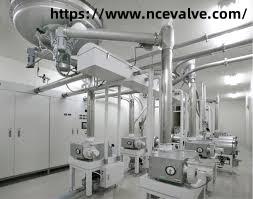
In complex pipeline networks, the role of a Pipe Cleaning Valve Factory is often underestimated during early project planning, yet its impact becomes evident once cleaning operations begin. At ncevalve, valve structures developed for special operating conditions focus on internal continuity, stable sealing behavior, and predictable performance under repeated cleaning cycles.
Pipeline cleaning valves differ from conventional isolation valves because internal geometry directly affects pig movement, debris transport, and pressure balance. A valve cavity that introduces abrupt changes in cross section can cause cleaning tools to slow, rotate unpredictably, or collect residue. For this reason, internal flow paths are shaped to remain consistent with the pipeline bore, reducing disturbance during cleaning operations.
Internal Geometry and Pig Compatibility
A critical design consideration involves how pigs interact with valve interiors during passage. Uniform bore alignment, controlled tolerances, and smooth transitions reduce the risk of contact stress. When valves are installed within long-distance systems, even minor geometric inconsistencies may affect overall cleaning efficiency over time.
Special condition ball valves designed for cleaning applications often rely on reinforced ball openings and carefully positioned sealing elements. These features aim to limit material buildup without compromising shutoff capability. The objective is not aggressive cleaning action, but stable flow behavior that supports predictable system maintenance.
Sealing Stability Under Repeated Cleaning Cycles
Repeated cleaning introduces thermal variation, pressure fluctuation, and particle movement, all of which influence sealing behavior. Materials selected for seats and sealing interfaces must balance flexibility with resistance to deformation. Excessively rigid materials may suffer surface damage, while overly soft options may lose dimensional stability.
Manufacturing processes influence long term valve reliability as much as material selection. Controlled machining, consistent surface finishing, and post processing inspections ensure that sealing interfaces maintain functional alignment throughout service life. These factors contribute to stable operation even after extended idle periods between cleaning cycles.
In advanced pipeline systems, cleaning valves are no longer passive components. They actively shape maintenance outcomes through structural behavior and internal flow guidance. Selecting valves developed for such environments reduces uncertainty during operation and maintenance planning. For operators seeking solutions engineered around these realities, collaboration with a Pipe Cleaning Valve Factory such as ncevalve becomes a strategic decision. More information about specialized valve designs can be found at https://www.ncevalve.com/

 English
 Arabic
 Spanish
 Portuguese
 Deutsch
 Turkish
 Dutch
Dutch
 Italiano
 Russian
 Romaian
 Portuguese (Brazil)
 Greek
Greek