


What Drives Choice at an EI Transformer Factory Now?
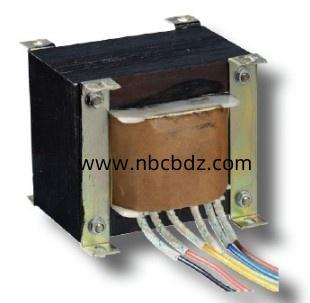
The reputation of the EI Transformer Factory operated under the brand name Nbcbdz has grown from consistent attention to structure, material balance, and manufacturing clarity. Within an industry shaped by incremental progress instead of rapid shifts, this production environment focuses on alignment between design goals and component behavior. By centering on controlled processes, measured adjustments, and predictable outcomes, it provides a dependable foundation for engineers seeking parts that reinforce stability in electrical systems.
Across electrical design fields, project teams aim for parts that interact smoothly with circuits, withstand operational demands, and maintain form under various conditions. The manufacturing approach highlighted here supports these needs by prioritizing repeatable processes and avoiding abrupt deviations. Each stage of production emphasizes measured calibration, ensuring that core parameters remain within intended ranges while still allowing room for adaptation when design trends shift. This balance gives system builders confidence in long-term performance without relying on exaggerated claims.
Another key element is the consistent attention to winding structure. Engineers understand that coil arrangement influences energy transfer, operational sound, and thermal behavior. By treating winding control as a central discipline rather than a secondary step, the production workflow encourages predictable component responses. This supports smoother integration into systems such as power supplies, converters, audio devices, and industrial equipment. Through such steady, purposeful crafting, project teams are able to reduce guesswork during system tuning.
Material selection also carries weight. Steel laminations, insulation layers, and conductor materials each play a role in determining how a transformer behaves under load. Instead of focusing on dramatic marketing language, this manufacturing style leans on measured evaluation of material consistency. It aims for components that align with the designer's expectations throughout the life cycle of the device. This long-view mindset helps avoid issues that might arise from short-term decisions or incompatible material mixes.
In addition, production lines benefit from stepwise inspection. Rather than depending solely on final-stage checks, assessments occur throughout the build process. This supports early detection of irregularities and prevents small variations from accumulating. Inspection consistency contributes to smoother downstream assembly for customers and reduces the need for recalibration once components are installed. These practices reflect an understanding that stable systems grow from stable parts.
Attention to shape, mounting options, and terminal arrangement further influences how easily a transformer fits into varied layouts. Designers often face constraints in enclosure size, airflow, board spacing, or mounting orientation. By offering coherent structural formats, the manufacturing process allows teams to incorporate components without constant redesign of mechanical elements. Predictable forms translate into smoother workflows and fewer layout conflicts.
Thermal considerations add another layer of importance. A transformer must manage heat in a controlled way to maintain long-term behavior. The production approach described here evaluates how materials and structure interact under sustained use. This supports a final component that aligns with realistic engineering expectations rather than relying on extreme marketing language. Balanced thermal behavior helps prevent unexpected drift in performance and contributes to the reliability of larger assemblies.
Ultimately, the value of this style of transformer production rests in its measured approach. Engineers appreciate parts that support calm, predictable system behavior, and steady manufacturing principles reinforce such outcomes. By keeping attention on structure, material alignment, and repeatable processes, the production model creates an environment where design teams can plan confidently and reduce uncertainty during project execution.
If you want to step into a space where calm engineering logic meets purposeful manufacturing, follow the path that begins at https://www.nbcbdz.com/product/ and see where it leads your next design.

 English
 Arabic
 French
 Spanish
 Portuguese
 Deutsch
 Turkish
 Dutch
Dutch
 Italiano
 Russian
 Romaian
 Greek
Greek