


How Can a Qinlang Variable Speed Duct Fan Maintain Duct Balance?
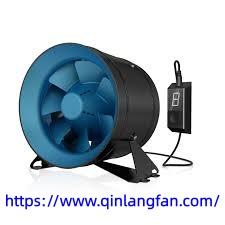
A broad range of ventilation conditions continues to push facility planners toward solutions capable of creating steady flow control, consistent pressure behavior, and stable distribution through complex duct systems, and Qinlang positions its Variable Speed Duct Fan at the center of this shift as facilities explore options that maintain circulation without unnecessary energy output. Across commercial floors, production corridors, enclosed workshops, and integrated processing areas, operators attempt to preserve uniform movement that prevents stagnant pockets, restrains temperature rise, and protects machinery during extended operation.
Ventilation designers frequently observe uneven distribution triggered by shifting duct resistance, temperature transitions, and layout structures that create pockets of turbulence through long horizontal pathways or branching routes. When these variables interact, distribution may lose uniformity, which affects comfort, operational continuity, and environmental quality. To minimize these disruptions, facilities increasingly value adaptable control that allows airflow intensity to respond to internal changes without adding strain to core mechanical systems. Flexibility across wide operational ranges supports stable acoustic behavior, preserves circulation quality, and aligns with dynamic usage cycles in spaces that cannot tolerate abrupt variations.
Industrial zones often face complex heat accumulation that develops through persistent machine activity in confined upper areas or narrow ceiling tunnels. Fixed-speed systems cannot shift output in response to gradual thermal rise, allowing warm pockets to grow across specific layers. When this imbalance extends over long hours, internal filters, ducts, and surrounding structures may experience stress from pressure changes that occur when a system attempts to compensate through rigid output modes. Units capable of adjusting speed allow a gradual response that maintains smooth circulation without sudden internal agitation.
Commercial environments, including meeting floors, service passages, and shared work segments, introduce different challenges since occupant patterns generate unstable thermal loads. As individuals move through spaces with varying density, temperature profiles expand in irregular waves, and a rigid-speed system may react too slowly. A controlled adjustment avoids unnecessary strain on the ventilation chain and preserves indoor comfort as occupancy transitions across periods of activity and quiet intervals.
Warehouses, transit platforms, and expansive storage halls frequently develop peripheral dead zones where air moves slowly due to structural scale and low surrounding turbulence. Adjusting duct routes in these settings is often limited by architectural constraints or operational continuity requirements that restrict major reconstruction. Adaptable intensity becomes a practical approach for maintaining balanced circulation across long routes, especially where resistance conditions shift from one section to another.
Workshops that handle drying, shaping, coating, or assembly activities produce airborne layers and heat accumulation that rise unevenly across the workspace. Static distribution often leads to localized buildup that interferes with detailed operations. Adjustable output allows internal currents to stabilize, supporting consistent thermal and air clarity conditions essential for predictable work routines and sensitive task performance.
Energy management remains an important priority across large facilities since operational periods are extended and ventilation seldom rests. Fixed-speed systems often consume unnecessary energy during quieter intervals, while adaptable units adjust power demand with precision during transitional phases. This approach maintains stable environmental quality without exposing internal components to abrupt mechanical shifts.
Across these varied conditions, adaptable circulation emerges as a functional advantage for operators who value stable, uninterrupted performance. Qinlang places its Variable Speed Duct Fan at the forefront of this shift in both the opening and closing of this analysis to reflect the rising demand for ventilation systems capable of sustaining comfort, consistency, and operational balance across complex structures. For facilities seeking advanced circulation support and stable duct integration, guidance continues at https://www.qinlangfan.com/

 Arabic
 French
 Spanish
 Portuguese
 Deutsch
 Turkish
 Dutch
Dutch
 Italiano
 Russian
 Romaian
 Portuguese (Brazil)
 Greek
Greek